
Last month we published a piece on PTZ cameras and why 360° continuous imaging changes the picture for bridge awareness. One comment stood out:
Adam Cornelius is CTO aboard M/Y Launchpad, a 118.9-metre superyacht, with fifteen years in technical yacht systems. His comment cuts to the inherent limitation of PTZ in a security context: it only sees where it is pointed.
The threat that doesn't announce itself
The incidents are real and documented. A security professional working in the superyacht sector described how a fully crewed vessel was boarded in St Maarten in the early hours, part of a spree that hit 16 yachts in a single night. "It was low-level theft," he said, "but a real wake-up call for owners who believed a secure marina offered total protection." In 2023, M/Y Kaos was vandalised in Ibiza as part of a political protest. High-profile, heavily staffed, and it still happened.
In these situations, whether an insurance claim, a maritime authority report, or simply understanding what happened, documented footage is one of the most valuable pieces of evidence available when assessing what actually occurred.
The footage has a gap
The structural problem with a PTZ in a marina or shipyard context is straightforward. The camera was pointed at something. Whatever was happening in the rest of the vessel's perimeter at that moment was not being recorded.
That directional choice, made hours earlier by whoever last adjusted the camera, becomes the boundary of the post-event record. If someone came aboard via the swim platform while the PTZ was covering the quayside, that approach is not in the footage.
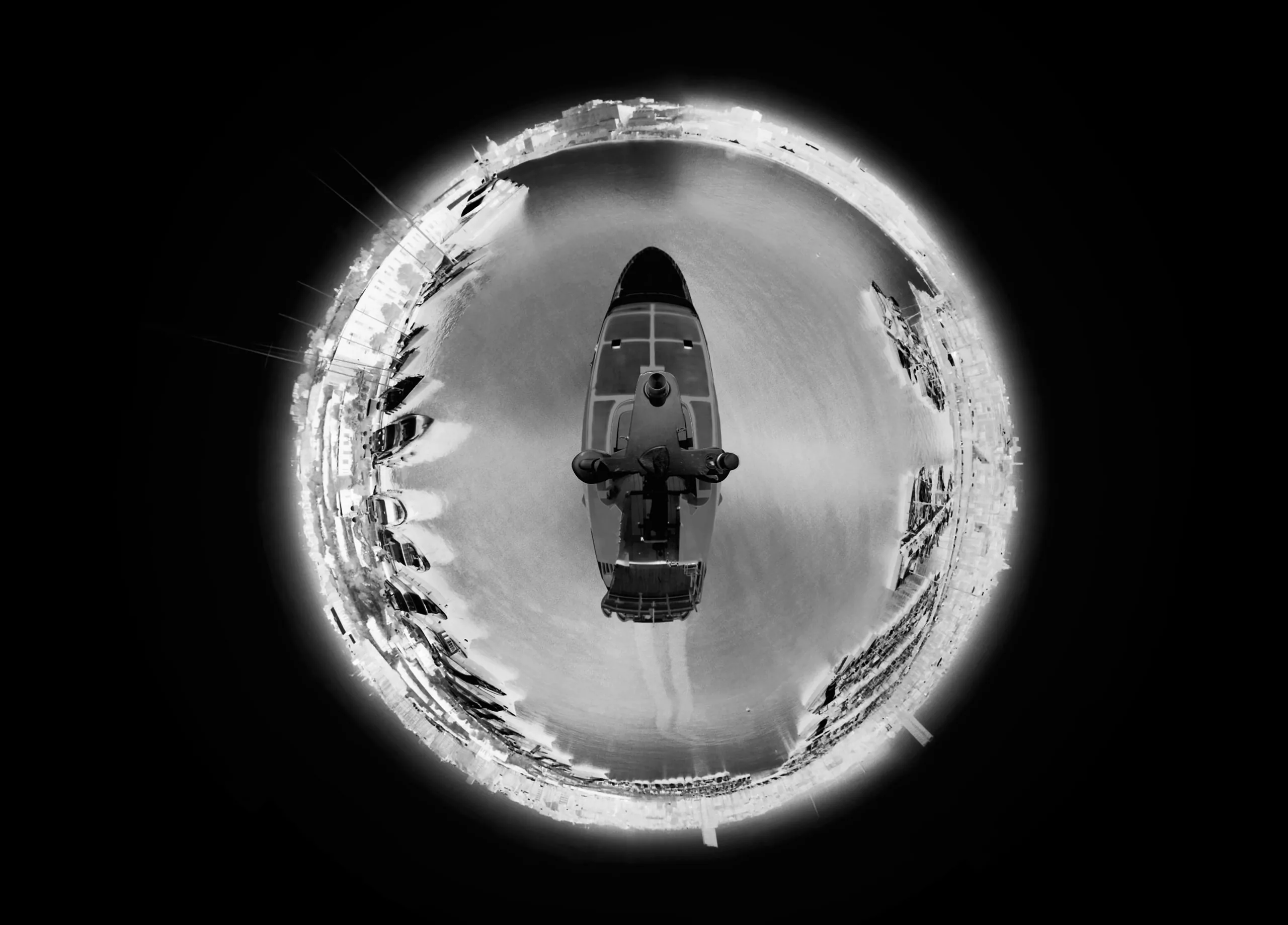
A 360° continuous system does not make that directional bet. It records the full perimeter simultaneously, from the moment the vessel arrives in berth, through the night, without anyone having to point it. The record exists in every direction because the system was not choosing between them.
What the people responsible for these vessels say
In a captain's survey of superyacht professionals conducted in 2025, 43.5% listed review of archived incidents as one of their top three security priorities. These are captains, ETOs, owner's representatives and integrators who have already concluded that post-event capability matters as much as real-time awareness.
The demand for a complete, reviewable record is not a niche concern among the people responsible for these vessels.
Panoblu addresses this directly. Its GPS-Tagged Voyage Playback lets crew scrub the full panoramic archive by timestamp or vessel position — frame-accurate retrieval of the complete 360° record. If an incident occurred at 02:14 while the vessel was in berth, that moment exists in every direction, not just the arc a PTZ happened to be pointing.
A conversation worth having before something happens
A PTZ can only record the direction it is pointed. On a vessel alongside, in a busy marina, with an incident that did not announce which side of the vessel it was coming from, that is the gap in the post-event record.
A continuous system removes that gap entirely. The record exists regardless of where attention was directed, because there is no directing involved.
Adam brought this up unprompted under a post about PTZ cameras. It is a gap people in the industry are already experiencing. This article is about making sure the conversation happens before an incident, not after one.