
In close-protection work at sea, the problem is almost never a lack of cameras. It is the opposite. You walk onto a vessel and there are a bank of screens in the security room, each pointing a different way, and the officer of the watch is spending half their attention working out which feed is which and where a contact actually sits in relation to the ship. By the time you have oriented yourself, the moment has gone.
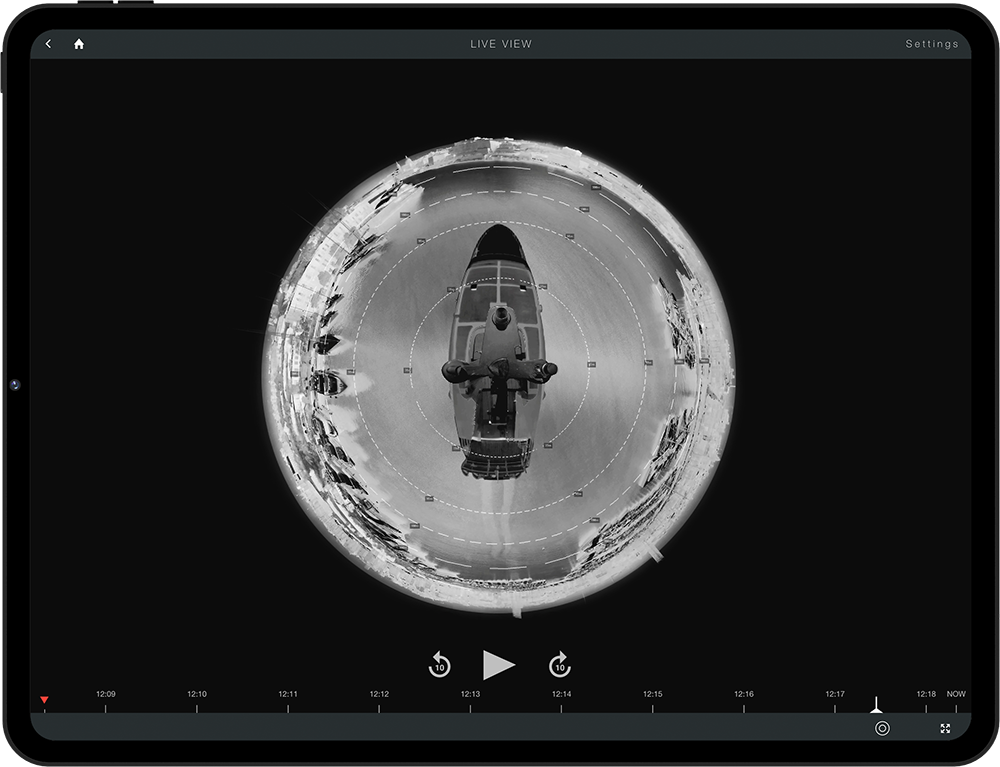
That is the gap Panoblu's 360° thermal camera system addresses. One continuous view, compass-aligned to the vessel, with the ability to focus the instant something catches your eye. It sounds simple, but operationally it changes how a watch is stood. You are not interpreting multiple angles, you are monitoring one and investigating on demand.
When Seconds Count, Complexity is the Enemy
Think about a yacht anchored off Monaco, Capri or the Amalfi Coast in peak season. Guests are swimming, tenders and jet skis are moving around the vessel, nearby traffic is constantly changing, and smaller boats come over out of curiosity. When you have fifteen guests in the water and on toys, the hard question is the basic one: is that one of ours, or not?
A continuous panoramic view allows operators to answer that question far more quickly than switching between multiple isolated camera feeds. And it closes the blind spot that catches crews out time and again. When you are alongside, attention naturally focuses on the quayside. The water side can easily receive less scrutiny. A 360° system ensures full situational awareness is maintained around the entire vessel, not just the half you happen to be watching.
Supported by thermal imaging, the system also improves visibility during low-light conditions and overnight operations, the hours when most security vulnerabilities go undetected.
The Technology is Only Half of It
Here is the part that matters most to me. Technology like this does not replace physical security, and it should not pretend to. We see beautifully equipped estates and yachts where nobody is watching the screens and there is no plan for what happens after a breach. Insurance can replace the watch and the jewellery. It cannot replace a principal's sense of safety in their own cabin once something has happened.
The value comes when the technology and the people on the ground work as one. Having spent more than two decades as a Royal Marines Commando and years overseeing security operations for ultra-high-net-worth individuals, private residences and yachts, I have seen first-hand how security technology has evolved. The pattern is consistent: the best systems are those that give trained professionals faster awareness and clearer information, not those that attempt to replace judgment with automation.
Used that way, a system like Panoblu's genuinely lifts a team's capability. For a vessel that is not yet well organised on security, it at least means someone can see all the way around the vessel and act on what they find.
The Test of Any Tool
For me, the test of any security tool is simple: does it make a watch more efficient and a response faster? A single compass-aligned view that covers the full perimeter, with thermal for low light and the ability to zoom on demand, passes that test. The era of managing a bank of screens is not inevitable. It is a habit. And habits on the bridge are worth examining.