Solutions
Every bearing,
every job.
Whatever the vessel is, and whatever the watch is doing, the picture is already there on every bearing, day and night.
The world’s first true 360° hybrid camera system for superyachts: thermal infrared and visible light in one.
By vessel
Industries
Start with your vessel. The same unit, the same 360° picture. What changes is the mounting, the number of units and what the crew does with the view.
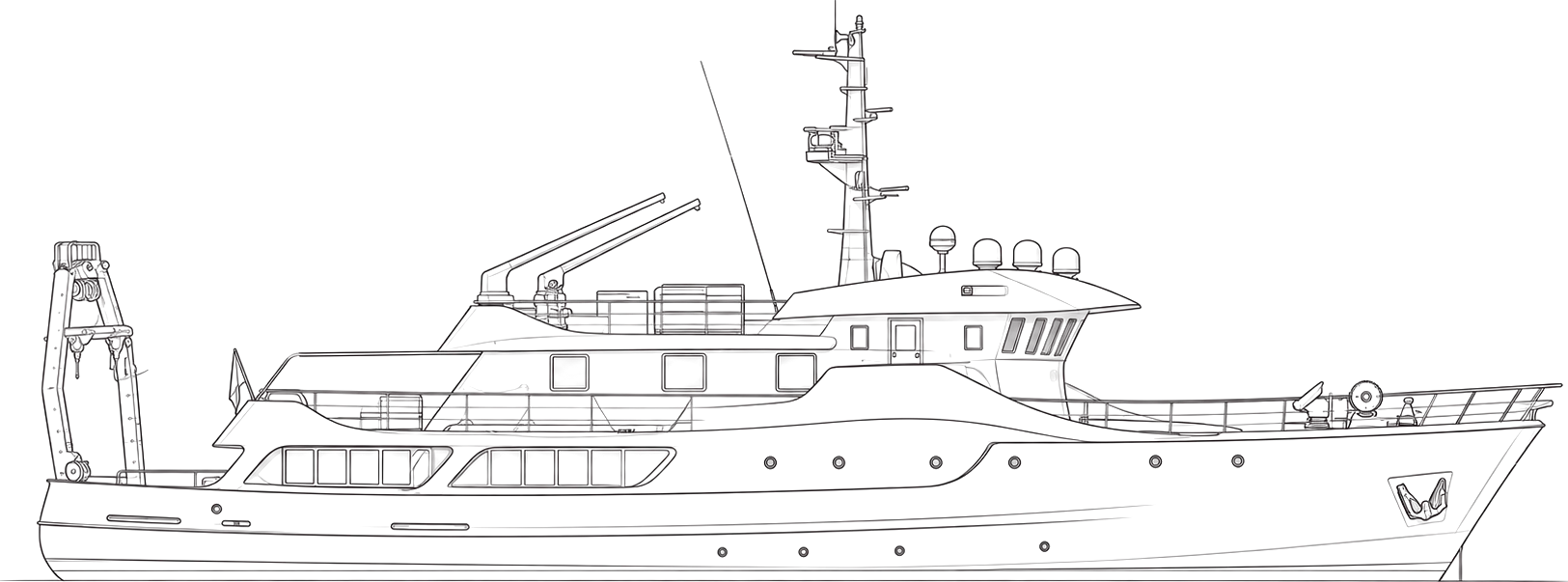
Motor yachts & superyachts
Swim platform to horizon, thermal infrared and visible light together, with nothing to point.
Read more →Sailing yachts
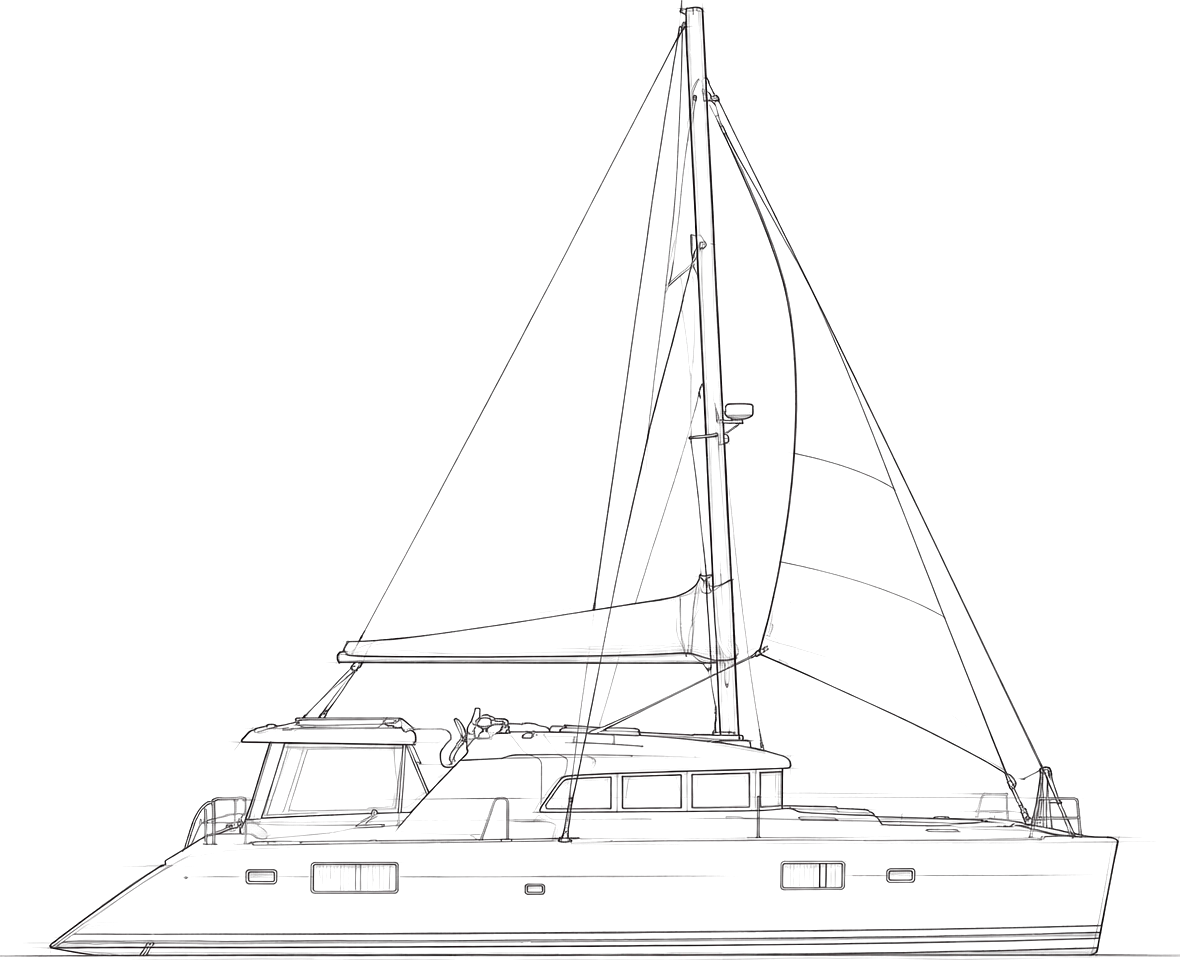
Short-handed watches, rigs that shade a single position, and risks that are not all forward.
Read more →Commercial marine
Watchkeeping visibility on every bearing, day and night, and the voyage on record.
Read more →Cruise ships
Continuous exterior image capture on every bearing, always recording, on very large hulls.
Read more →Naval & defence
A staring 360° EO/IR payload for crewed and uncrewed platforms, on partner surfaces.
Read more →By job
Solutions
Start with the job. Five of them, done by the same 360° feed at the same time, because it never has to choose a bearing.
Navigation
A stronger look-out on every bearing: underway, at anchor and in port, day and night.
Read more →Incident review
The exterior voyage record. Go back to the moment, on any bearing, weeks later.
Read more →Security
The waterside perimeter covered on every bearing, streamed into the vessel’s VMS and recorded.
Read more →MOB recovery
Every bearing was already being recorded. Rewind, hold contact, work the search.
Read more →Leisure
Docking view, night eyes, deck cameras and recorder in one housing on the mast.
Read more →Motor yachts & superyachts
The bearing you weren’t pointing at
- A gimbal is a decision about where to look. Every time it turns to one bearing it leaves the rest of the circle unwatched: FLIR publishes an instantaneous field of view of 24° by 18° for its M-Series, which is the exact shape of that choice. Panoblu holds all 360° at once, with no moving parts.
- A docking camera stops a few boat lengths out. A navigation thermal camera starts further away than the tender. One Panoblu unit spans both, swim platform to horizon, thermal infrared and visible light on the same frame.
- Underway, at anchor and in port, the coverage does not change. Nothing has to be woken up and aimed first.
Sailing yachts
Short-handed means the watch is intermittent by definition
- Under sail the risks are not all forward. The gybe, the dark foredeck, a crew member in the water astern. A narrow forward camera looks after the bow and nothing else, while Panoblu keeps the whole circle, above and below the horizon, on one frame.
- Rigs are addressed head-on. A rotating mast gets a configurable heading offset, so the view always reads bow and aft; a rig that shades one position is covered by a two-unit install (PB-SL-2) fused into a single 360° picture in the app. Every install is survey led, with a mast kit sized to the section.
- You can see the coverage from your own spreader height before anything is ordered.
Commercial marine
Watchkeeping visibility on every bearing, day and night
- A staring 360° EO/IR payload: the visible-light array and the LWIR array capture together, every bearing at the same moment, with nothing slewing. It is a supplement and a back-up to radar and AIS, and it is read by the watch alongside them.
- Craft with no AIS and almost no radar signature still read as warm shapes in thermal infrared. EMSA reports that around half of very serious collisions happen at night, which is the shift where a second pair of eyes is hardest to find. That figure describes the world’s fleet, not this product.
- The voyage is on record as well. Near-miss review, crew training and the conversation with the fleet manager, the DPA and the underwriter all start from footage that was already being kept.
Naval, government and uncrewed programmes: see Naval & defence below.
Cruise ships
Continuous exterior capture, always recording
- Certified systems answer the alarm. Panoblu keeps the picture that establishes what happened, where and when, on every bearing at once, in thermal infrared and visible light.
- Very large hulls are covered by a dual install (PB-SL-2): two units fused into one 360° picture in the app, so the bridge still works with a single view.
- US law asks passenger vessels to carry technology “capturing images of passengers or detecting passengers who have fallen overboard” (46 U.S.C. §3507). Panoblu is the continuous image-capture layer. It sits alongside certified man overboard detection systems, and it is a good companion to them rather than a substitute.
Detection Range
See it first, in every direction
From a tanker on the horizon to a swimmer alongside, see how far Panoblu spots every target across the full 360° view, day and night, with live range from RAD.
See the full detection rangeIncident review
The incident you can actually review
- Every system records continuously, on every bearing, so the vessel keeps an exterior voyage record rather than a handful of clips. The onboard DVR is standard on every Panoblu, the 2 TB SSD holds around two months at full resolution, and recordings are geotagged whenever a live NMEA feed is connected.
- A directed camera recorded the bearing someone was pointing it at. Panoblu recorded all of them. After the fact that is the entire difference, because the events of interest are rarely on the bearing anyone was watching at the time.
- Mark the moment in the app and rewind to it, then replay the incident from whichever bearing answers the question. Near-miss reporting, a crew debrief the morning after, video evidence for insurers, management and surveyors, the security audit at refit: all of it starts from footage that was already being kept.
Security
Wide-area surveillance for the vessel itself
- Ship self-surveillance: the waterside perimeter covered on every bearing at once, and recorded, so an approach from any quarter is reviewable whether or not anyone was looking that way at the time.
- A staring 360° EO/IR payload. EO is Seaview, the visible-light array; IR is the LWIR array. Coverage 360° by 110°, up to 25 fps, 8K capture with 4K live playout, all zoom digital down to an 11° field of view. ONVIF presents up to four virtual PTZ feeds, each day colour or LWIR, over the one PoE++ cable that also powers the unit. Aligned with ONVIF Profile S and tested against Agent DVR, ODM and Milestone. To the VMS it looks like any other PTZ camera.
- Passive and non-emitting, with no moving parts and nothing slewing over the guests’ heads. The retained record is also what a buyer’s surveyor asks for at refit.
Man overboard recovery
At the moment someone goes over, every bearing was already being recorded
- Certified systems answer the first question: did someone go over? Panoblu helps the crew with the next two. Where are they now, and can we still see them?
- Rewind the 360° recording to establish the moment and the bearing of loss. A person in the water reads warm against a cold sea in thermal infrared. Because the frame never turns, visual contact holds right through the recovery turn, and RAD gives the watch a range and a bearing to work the search pattern from.
- Panoblu helps with man overboard recovery, and it is a good companion to a certified man overboard detection system: the certified system raises the alarm, Panoblu keeps the picture.
Leisure & guest experience
One system instead of four
- The docking view, the night eyes, the deck cameras and the recorder all live in one housing on the mast. One cable up, no bridge hardware, nothing turning.
- It also keeps the moments people came for. 16 MP stills pulled straight out of the 360° frame, the swimmers and the toys off the platform, a pod of dolphins on the bow, guests dragging the view around on their own phones.
- Every voyage is on record, geotagged when the system is connected to NMEA, so an owner can walk back through an anchorage from anywhere. Cold-water and expedition itineraries are covered too: the housing is IP68 and rated from -20 °C to +50 °C.
Tell us about your vessel
Send us the vessel, the rig and what you need the view to do, and we will come back with the right Panoblu configuration for it.
Contact Us